Sometimes the best songs come from the moments we would rather forget. A friendship begins to unravel, conversations become increasingly difficult to come by, and eventually the uncomfortable realisation arrives that perhaps you have been putting considerably more into the relationship than the other person. For David Diaz, that experience provided the unlikely starting point for “Are We Gonna Talk?”, an infectious new single that turns personal frustration into an energetic slice of modern synth-pop.
The story behind the song is refreshingly straightforward. After years of showing up for a close friend, Diaz eventually found himself needing something in return: a little time, some company and the reassurance that the friendship mattered to both parties. When that didn’t happen, silence followed, and the question that eventually became the song’s title was sent in a text message. Diaz went home, wrote the track and recorded a demo that same night.
“Are We Gonna Talk?” is an appealing collision of bright synths, driving drums, funky rhythms and melodic pop sensibilities. There is a definite affection for the sounds and atmosphere of the 1980s, particularly the synth-pop and new-wave traditions, but Diaz isn’t interested in simply recreating a period sound. Working alongside producer Luke Kondak, he has found a way to bring those influences into a contemporary setting without losing the character that makes them so appealing in the first place.
The production has plenty of personality, too. There is a pleasingly rough edge to the vocals, with distortion and overdrive giving them a slightly compressed, almost transmitted-through-an-old-speaker quality. Stacked harmonies and call-and-response passages add further colour, while the lively instrumental arrangement provides an interesting counterpoint to the song’s more bittersweet lyrical content. It is a track that manages to sound simultaneously frustrated and thoroughly enjoyable.
That balance perhaps says something about where Diaz finds himself creatively these days. Having spent several years releasing music consistently, he eventually decided to step away from the relentless cycle of content, statistics and industry expectations. The time away allowed him to reconsider what success meant to him, reconnect with the simple enjoyment of making music and develop a clearer sense of the sound and identity he wanted to pursue.
There is a noticeable confidence in that decision. Rather than treating every release as another opportunity to chase numbers or maintain visibility, Diaz is increasingly interested in making music that reflects his own experiences and creative instincts. He still wants people to discover his work, naturally, but the objective is connection rather than celebrity. It is a refreshing perspective, particularly in an industry that can sometimes make the act of creating feel secondary to everything surrounding it.
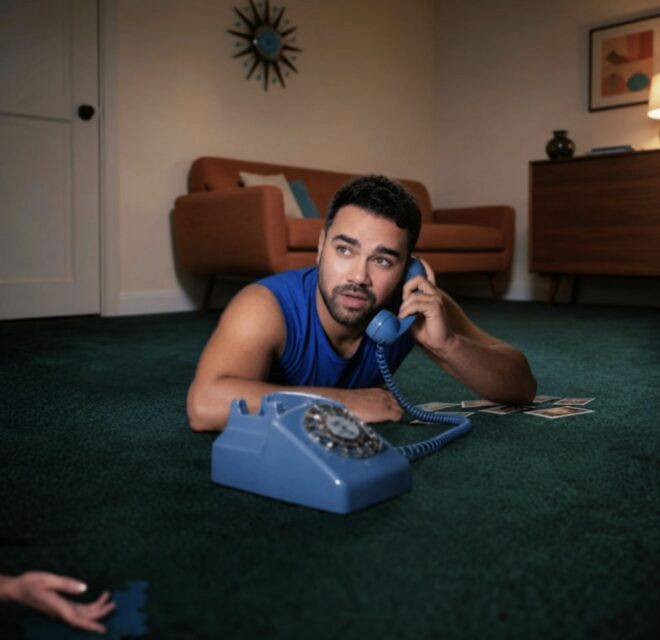
The visual campaign accompanying “Are We Gonna Talk?” takes that creative freedom into even stranger territory. Built around an imagined 1985 aesthetic, the wider project uses voicemails, letters, missing-person notices and fictional news reports to establish a nostalgic world with something decidedly unsettling lurking beneath its surface. The accompanying horror-comedy video introduces a group of David Diaz detractors, a cabin, a scrapbook documenting their dislike of the artist, and a masked defender who begins dispatching the assembled critics in classic B-movie fashion. The eventual revelation that the masked figure is Diaz himself turns the whole thing into a deliberately ridiculous interpretation of cutting toxic relationships out of your life.
It is an entertaining concept, and one that reveals another side of an artist who clearly enjoys playing with his own image. There is a dry, self-deprecating humour running through the project, and the willingness to embrace the absurd rather than take himself too seriously gives the campaign a personality beyond the usual promotional machinery.
What makes “Are We Gonna Talk?” particularly appealing, however, is that its emotional starting point remains recognisable beneath all the neon nostalgia and horror-comedy theatrics. Whether the relationship in question involves a friend, a romantic partner or a family member, most of us have experienced that uncomfortable moment when we realise we are the ones keeping the conversation alive.
David Diaz has turned that moment into something catchy, colourful and unexpectedly uplifting. More importantly, he has done so while establishing a creative direction that feels genuinely his own. After several years away from solo releases, “Are We Gonna Talk?” sounds like an artist who has stopped worrying about what everyone else expects and rediscovered the pleasure of following his own instincts.
Sometimes the best way to move forward is to stop waiting for someone else to answer. David Diaz has certainly found something worth saying in the silence.
Find out more about David Diaz on his Website
Discover more from Indie Music Discovery
Subscribe to get the latest posts sent to your email.